
Home/Dry-aged Menu
干式熟成Dry-aged Menu
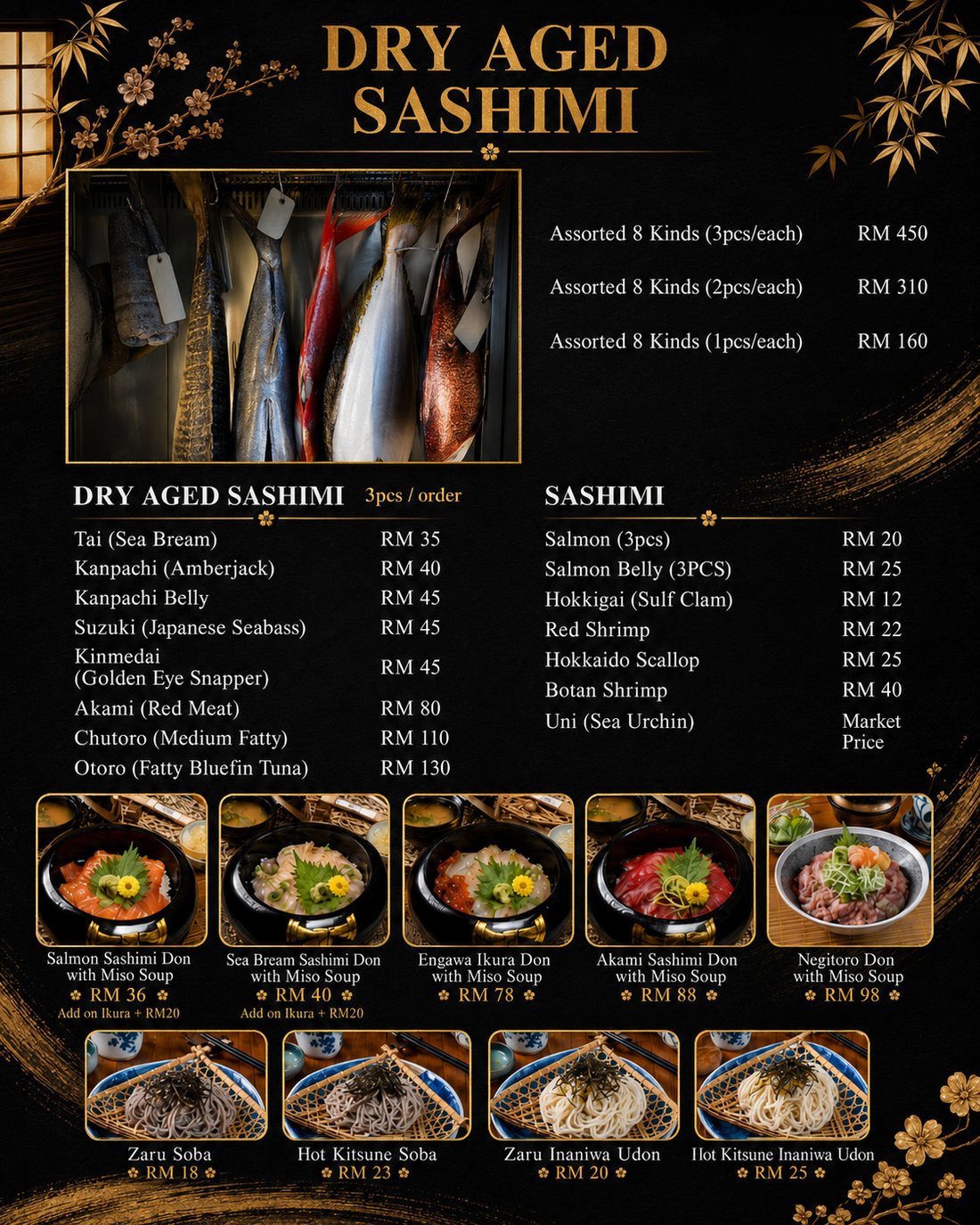
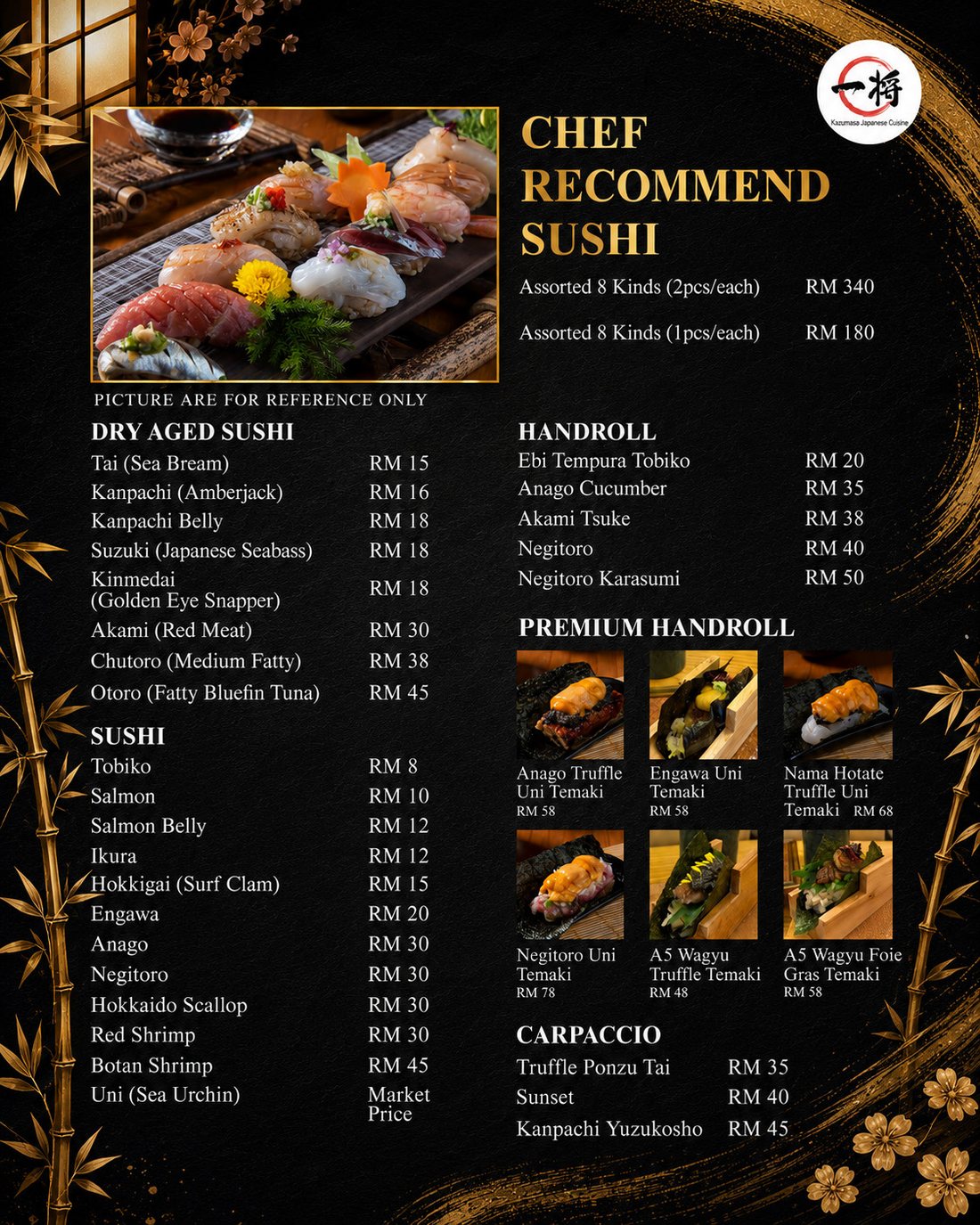
Eight fish, aged in-house to deepen their flavour. Order any of them as sashimi or as sushi, individually or as an assorted set of all eight.
Flavour, deepened
Fresh fish is clean, bright and firm — and we serve plenty of it. Dry aging is not a substitute for that. It is a second way to serve the same quality of fish, for the flavour it brings out rather than the one it starts with.
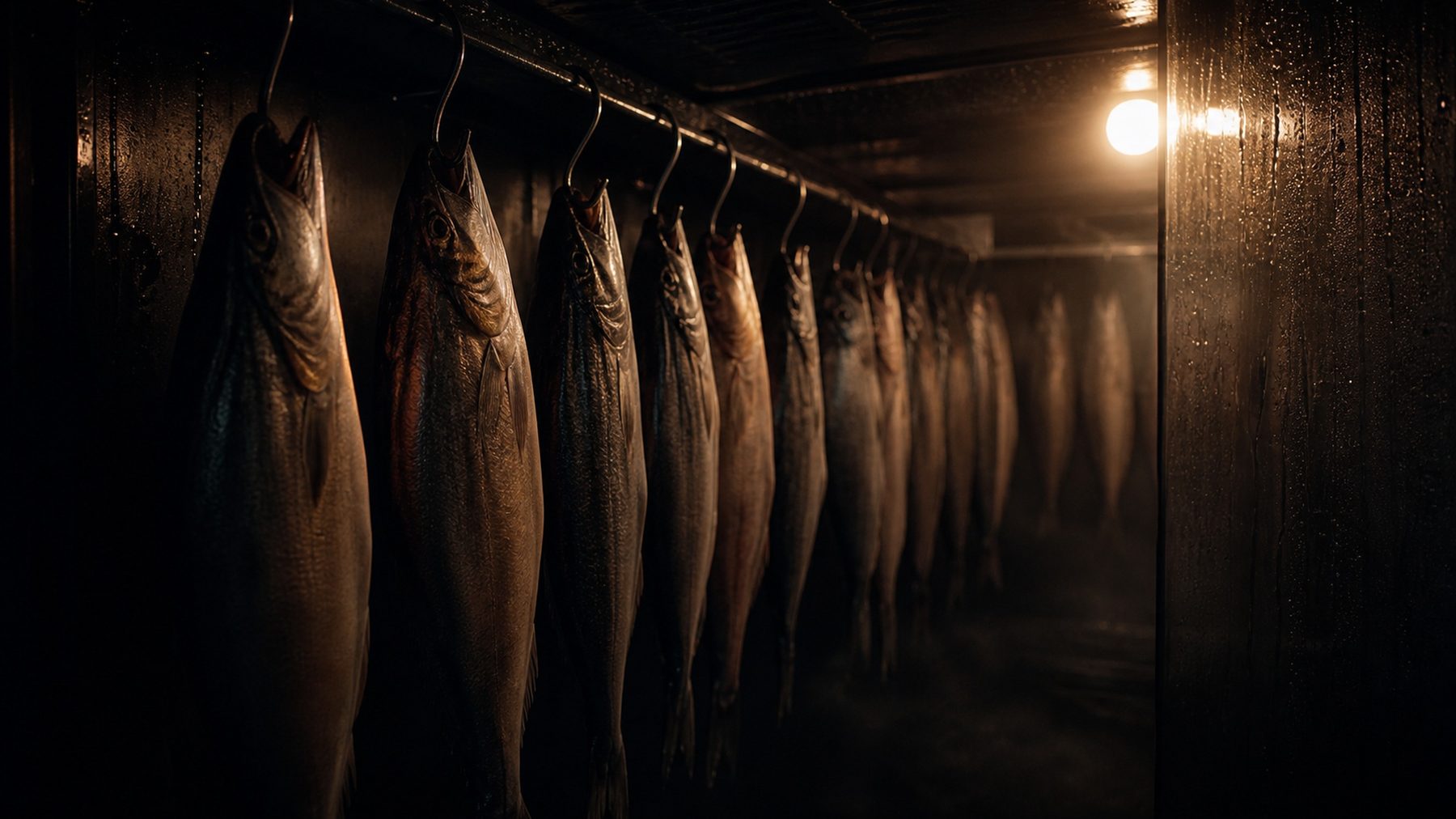
Held in controlled cold air, moisture leaves the fish steadily. Water content drops so what remains is concentrated, and as enzymes work, protein becomes amino acids — umami. The texture firms and turns silky against the tongue, and the flavour goes from clean to deep and rounded.
How long depends on the fish. A lean sea bream needs only a few days. Bluefin belly can take considerably longer. The chef decides when each piece is ready, which is why the list below changes in availability from week to week.
What we age
Blue Fin Tuna
Served in three grades — otoro from the fattiest belly, chutoro from the medium belly, akami from the lean red loin.
Kinmedai 金目鯛
Golden eye snapper. Delicate and faintly sweet, with a fat layer just under the skin that aging brings forward.
Kanpachi 間八
Amberjack. Firm, clean and a little buttery — the easiest of the aged fish to like on a first visit.
Suzuki 鱸
Japanese seabass. Lean and mild; aging gives it the body it lacks when it is completely fresh.
Tai 鯛
Sea bream. The classic white fish of Japanese cooking, and the one that changes most noticeably with a few days of age.
Come and taste the difference
The assorted sets are the fastest way to understand what aging does — five or eight fish side by side, in one order.